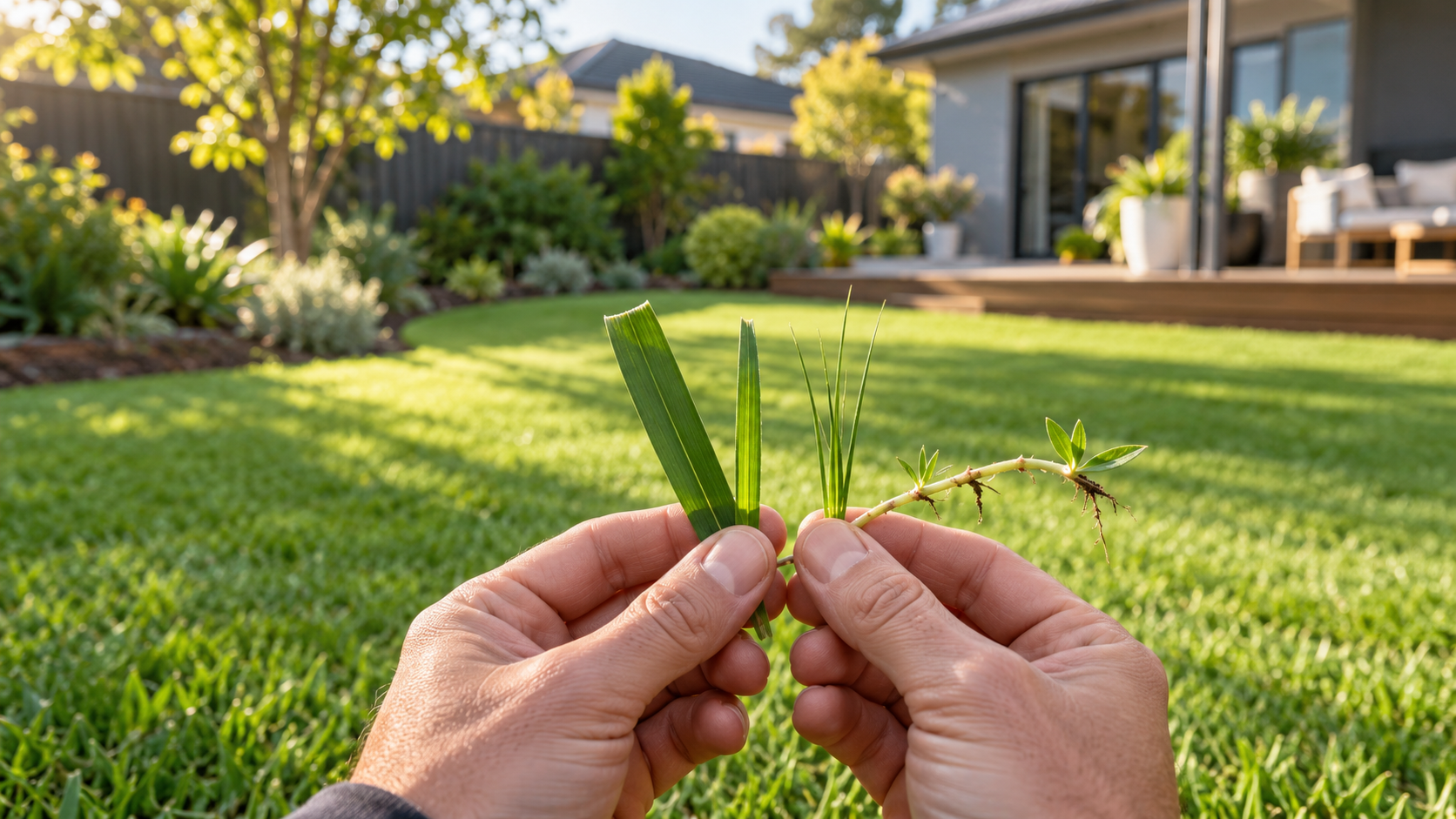
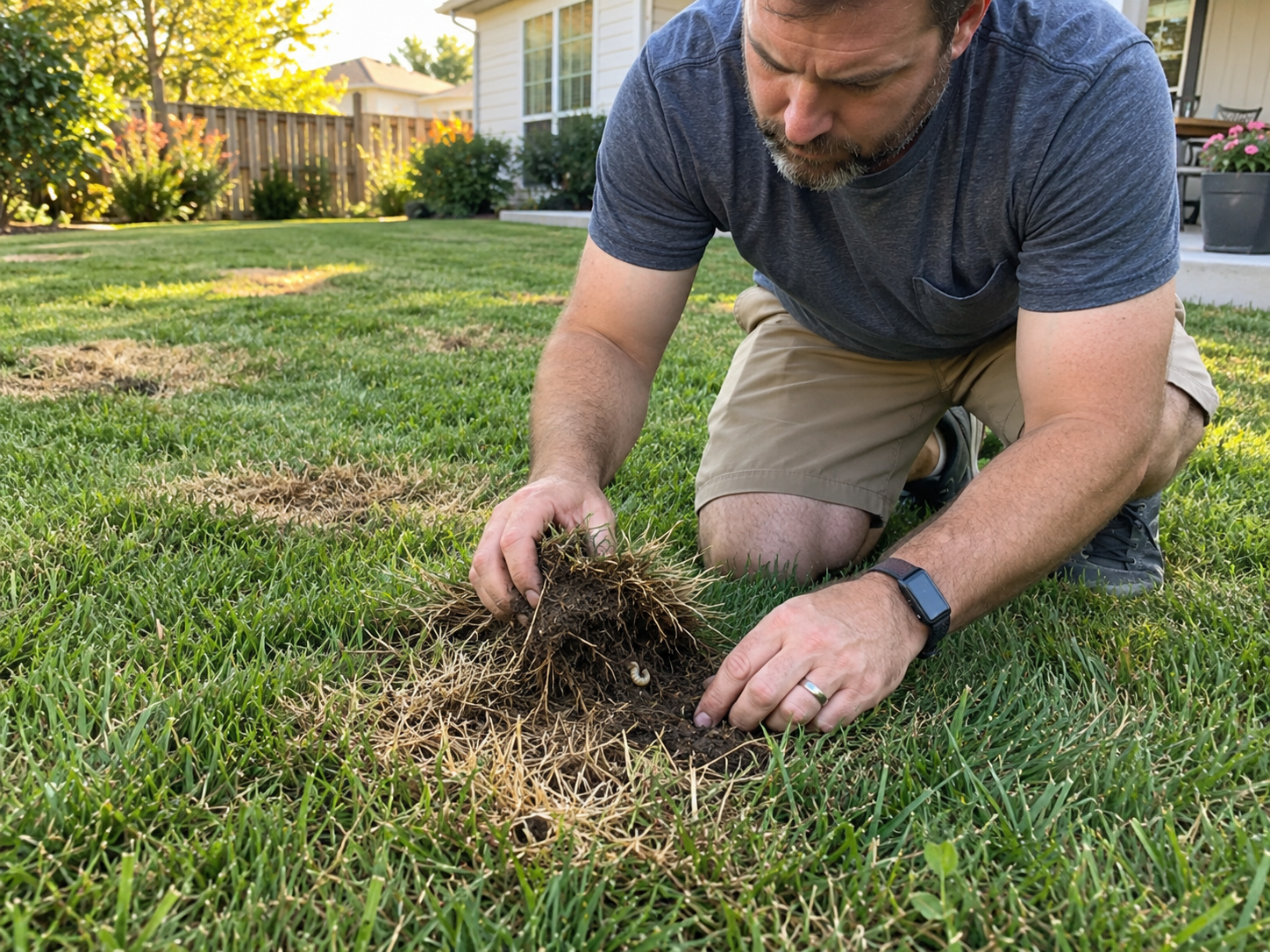
When winter arrives in Melbourne, many homeowners look out at their lawn and assume the worst. Growth slows down, colour fades, and patches can look tired compared with the strong growth of spring and summer.
The good news is that your lawn is usually not dying in winter. It is sleeping.
For warm-season grasses such as Prestige® Buffalo, Santa Ana Sports Couch, and Kikuyu, winter is a period of dormancy. Growth slows as the soil cools, and the plant shifts its energy from producing new leaf to simply staying alive until conditions improve. That change is normal. In fact, the right winter lawn maintenance is less about pushing growth and more about protecting the turf so it comes back strong in spring.
There is one important exception. Tall Fescue is a cool-season grass, so it stays greener and more active through Melbourne’s colder months. Even so, it still needs a slightly different winter routine to stay healthy and dense.
If you have been wondering how to maintain turf in winter, how often to water, whether to mow, or how to keep weeds under control, this guide will walk you through it clearly and practically.
A simple way to understand winter grass care is this: when soil temperatures drop below 16°C, warm-season turf begins to slow down significantly.
That includes varieties like Prestige® Buffalo, Santa Ana Sports Couch, and Kikuyu. Once the soil cools, the plant’s metabolism slows so it can conserve energy. That is why you see less growth, less recovery from wear, and often a duller colour.
This matters in Melbourne because winter is not just cold. It can also be wet, frosty, and unpredictable. One week may bring heavy rain and grey skies, while the next delivers icy mornings and bright afternoons. Those swings make winter lawn maintenance in Melbourne a bit different from warmer parts of Australia.
Here is how our main turf types respond:
Once you understand that winter is a protection phase, the rest of your lawn care decisions become much easier.

One of the best things you can do in winter is raise your mowing height.
As a general rule, lift your mower blades 10mm to 20mm higher than your summer setting. The extra leaf helps protect the crown of the plant, buffers against frost, and gives the lawn a bit more surface area to support itself while growth is slow.
For Melbourne conditions, these are solid targets:
Kikuyu can also be left a little higher than usual in winter, particularly if your lawn gets frost or sits in a cooler pocket.
The key is to avoid mowing too short. A lawn cut low in winter loses insulation, exposes the crown, and is much more likely to suffer from frost damage, thinning, and weed invasion.
It is also worth mowing less often. In summer, you might mow weekly or even more. In winter, many lawns only need attention every few weeks, depending on the variety and weather.
This matters more than many people realise.
Dormant or slow-growing turf heals slowly. If your mower blades are dull, they tear the leaf instead of cutting it cleanly. That jagged damage stresses the lawn and can open the door to disease. A sharp blade gives a cleaner finish and keeps the lawn looking neater even when growth is limited.
If you are asking how to maintain grass in winter, the answer for watering is usually very simple: water less, not more.
In a typical Melbourne winter, rainfall is often enough for established lawns. Overwatering is one of the most common mistakes we see. It is especially risky for Kikuyu and Prestige® Buffalo, which do not need much water while dormant and can suffer from fungal problems or root issues if the soil stays too wet.
The lawn should never stay constantly wet in winter. Damp, cool conditions are exactly what fungal problems enjoy.
If your lawn does need water, do it before 9 AM.
Morning watering gives the leaf time to dry before nightfall. That reduces the risk of winter moulds and fungal issues, including diseases that thrive when moisture sits on the leaf overnight.
For most Melbourne homeowners, winter watering should be occasional and based on observation, not routine. That one shift alone can make a big difference to winter lawn health.

Winter is prime time for weeds because many common lawn weeds love cool conditions more than your dormant turf does.
That is why Bindii, Clover, and Winter Grass often appear just when your lawn seems to be standing still. The turf slows down, gaps open up, and weeds seize the opportunity.
For small infestations, hand weeding can be enough.
For broader weed problems, use a Buffalo-safe broadleaf herbicide where appropriate and always follow label directions carefully. If you have Buffalo, this point matters because not every herbicide is safe for every turf type.
For lawns like Santa Ana Sports Couch, a well-timed pre-emergent herbicide in late autumn or early winter can be one of the most effective ways to keep the surface clean. It works by stopping weed seeds from germinating in the first place, which is far easier than dealing with established weeds later.
In practical terms, winter weed control comes down to three things:
If your goal is to keep lawn green during winter, controlling weeds is part of that picture. Even if your warm-season turf naturally loses some colour, it will still look much healthier without winter weeds stealing space, light, and nutrients.
For many Melbourne lawns, frost is the real winter villain.
This is especially true in outer suburbs and cooler pockets where overnight temperatures drop sharply. Frost forms ice crystals inside the grass leaf, and that frozen tissue is easily damaged.
Never walk on a frozen lawn.
When you step on frosted grass, the ice crystals inside the leaf cells can rupture. The result is often black footprints, burnt-looking patches, and damage that takes a long time to recover from.
If you get a heavy frost, wait until the lawn has thawed naturally before walking on it.
In severe frosty conditions, a very light early morning syringe with the hose at sunrise can help melt the frost gently before the sun hits the leaf hard. This can reduce leaf burn, but it should be a light spray only, not a full watering session.
Winter lawns recover slowly, so traffic management matters.
Try to limit repeated foot traffic across the same wet or frosty sections. If the backyard becomes a regular thoroughfare for kids, pets, or wheelbarrows, the grass in that path may thin out by spring. A temporary stepping-stone route can help spare the lawn during the coldest months.

Winter fertilising needs a lighter touch.
For warm-season grasses, avoid high-nitrogen fertilisers in winter. Nitrogen pushes leaf growth, and that is not what dormant turf wants. Forcing growth when the plant cannot properly support it often creates stress rather than improvement.
For Prestige® Buffalo and Santa Ana Sports Couch, a liquid iron product or lawn colourant can help improve appearance without pushing soft, unnecessary growth. That gives you a greener look while still respecting the plant’s natural winter rhythm.
For Tall Fescue, a light winter feed can be appropriate because it remains active through the cooler months. Just keep it balanced and avoid overdoing it.
The goal in winter is not to chase lush summer growth. It is to keep the lawn healthy, presentable, and ready for a strong spring response.
Good grass care in winter is really about setting up spring success.
A lawn that gets through winter cleanly and without unnecessary stress will recover faster, green up sooner, and need less repair work when temperatures rise.
Here is a simple winter checklist we recommend:
This is also a good time to look ahead. If your lawn struggles every winter because of shade, drainage, or variety choice, the colder months are ideal for planning improvements before the growing season returns.
If there is one thing to remember, it is this: do not panic-maintain your lawn in winter.
Your turf does not need to be pushed, forced, or fussed over. In most cases, it needs a lighter hand. Raise the mowing height, water only when necessary, control weeds early, protect against frost, and avoid feeding warm-season turf with high nitrogen.
That steady, sensible approach is what keeps a Melbourne lawn healthy through winter and ready to bounce back when spring warmth returns.
For homeowners who want the strongest winter colour, Tall Fescue is often the standout performer in Melbourne. For those growing warm-season varieties like Prestige® Buffalo, Santa Ana Sports Couch, or Kikuyu, winter is all about protection and patience.
A lawn that sleeps well in winter usually wakes up beautifully in spring.

.webp)