Brown patches that seem to appear almost overnight can be alarming, especially when your lawn looked perfectly healthy only days earlier. Add birds suddenly pecking at the grass or moths hovering around the lawn at dusk, and it is easy to suspect lawn grubs.
The good news is that most lawn grub problems can be managed if you identify them early. The important part is confirming that grubs are actually responsible before reaching for a treatment.
In Melbourne and across Victoria, several insects can damage lawns, and they do not all behave in the same way. Some feed below the surface on roots, while others chew through the grass itself.
Here is how to tell if you have lawn grubs, what to look for and what to do next.
“Lawn grub” is a general term used for several lawn-damaging insect larvae rather than one specific pest.
Two main groups cause confusion in Victorian lawns.
The first are curl grubs and other beetle larvae, which live in the soil and can damage the root system. African black beetle larvae and different cockchafer species fall into this broader group. Some cockchafer species are well established in Victoria and can affect lawns, parks and turf areas.
The second group includes caterpillar pests such as armyworms. These are the larvae of moths rather than beetles. Unlike curl grubs, they mainly feed on grass leaves and stems, often at night. Agriculture Victoria records several native armyworm species in southern Australia, as well as fall armyworm in Victoria.
Knowing which pest you have matters because the best treatment for a root-feeding grub may not be the right treatment for a caterpillar feeding above ground.
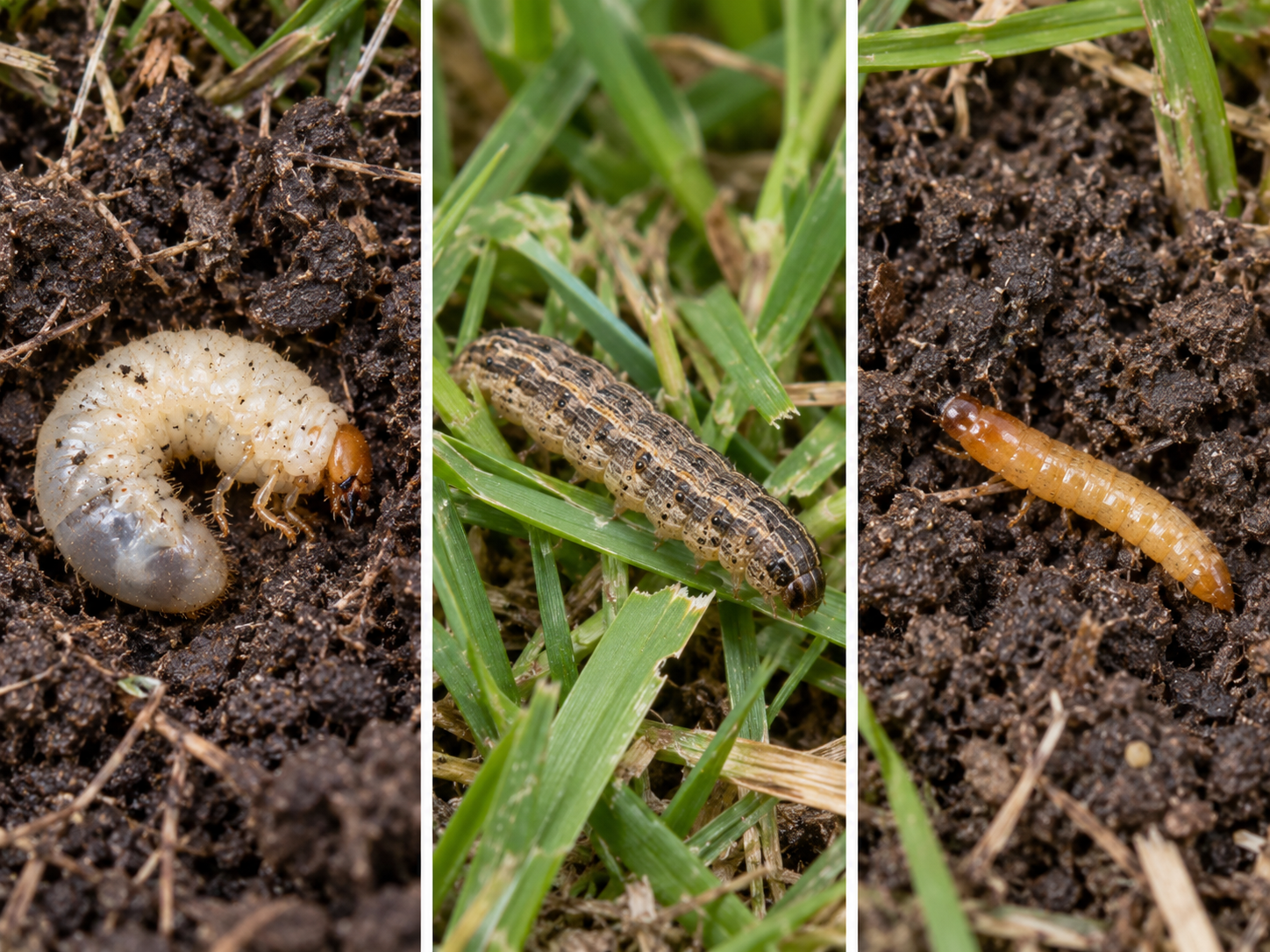
True curl grubs are usually creamy-white, soft-bodied larvae that curl into a distinctive C-shape when disturbed.
Depending on the species and stage of development, they can range from only a few millimetres long to around 20 to 30 mm.
Typical features include:
Victorian cockchafer larvae commonly fit this description.
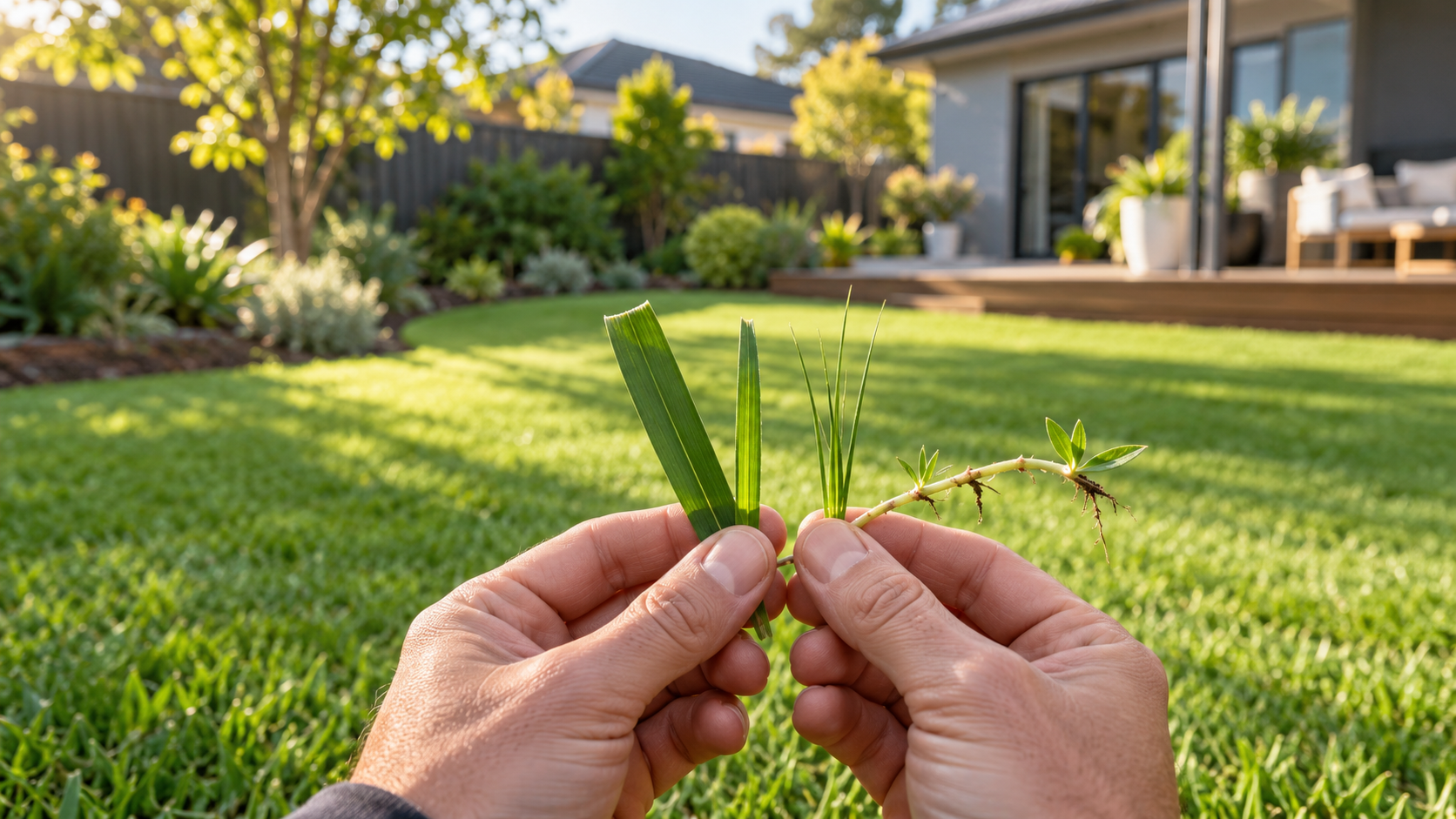
Armyworms look very different. They are caterpillars with elongated bodies rather than thick, C-shaped grubs. Native armyworms often have pale stripes running along the body, while fall armyworm larvae can have a distinctive inverted Y-shaped marking on the head.
You may also notice the adult insects. Beetle larvae eventually become beetles, while caterpillar pests develop into moths. Increased beetle or moth activity around the lawn can therefore be a useful warning sign, but it is not enough on its own to confirm an infestation.
The clearest way to tell if you have lawn grubs is to inspect the damaged area and physically look for the pest. Brown grass alone is not enough to make a diagnosis.
Here are the checks we would make.
Grub and caterpillar damage can move surprisingly quickly.
Look for irregular yellow, brown or thinning patches that are expanding into otherwise healthy turf. Caterpillar pests can remove leaf material quickly, while root-feeding larvae gradually weaken the turf from underneath.
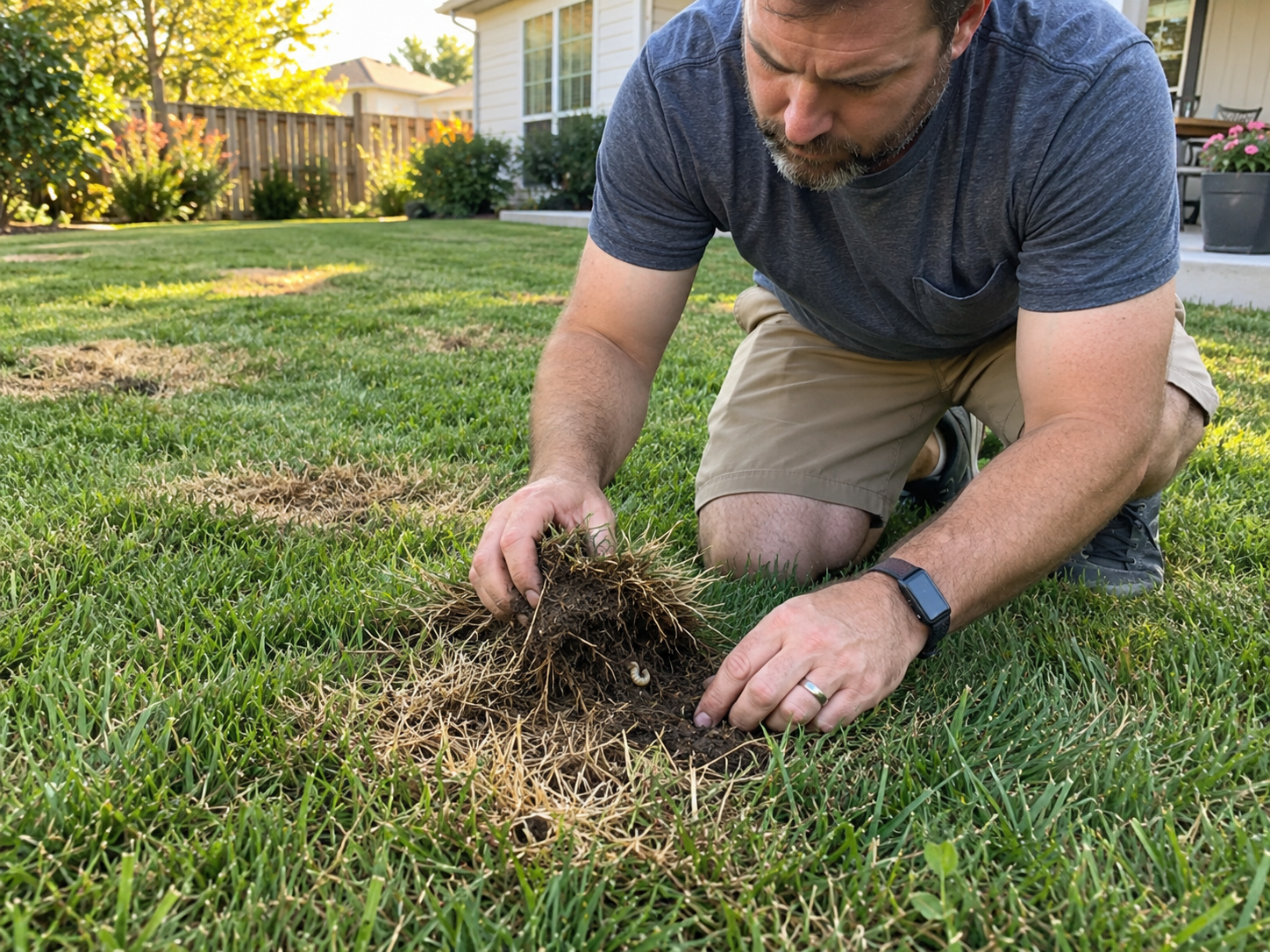
Grab the grass at the edge of a damaged patch and gently pull upwards.
If the turf lifts unusually easily or rolls back from the soil, inspect underneath. Root-feeding larvae can prune or sever enough roots that badly affected turf begins to behave almost like loose carpet. This is a recognised symptom of heavy African black beetle larval damage.
Healthy turf should normally remain firmly anchored by its roots.
Use a small spade to lift a section of turf where healthy grass meets damaged grass. Check through the soil and root zone for white, C-shaped larvae.
The edge of the damage is usually more useful than digging directly through a completely dead area because this is where actively feeding pests may still be found.
Finding one grub does not automatically mean it caused the problem. Soil is full of insects and other organisms. What matters is finding grubs around damaged roots and seeing a pattern that matches the symptoms above ground.
If you suspect armyworm or another surface-feeding caterpillar, mix a small amount of mild dishwashing liquid into a bucket of water and pour it over the edge of an affected area.
Watch the surface for around 10 minutes. Caterpillars hiding in the thatch or around the soil surface may emerge. This test is particularly useful around dawn or dusk when many caterpillar pests are more active.
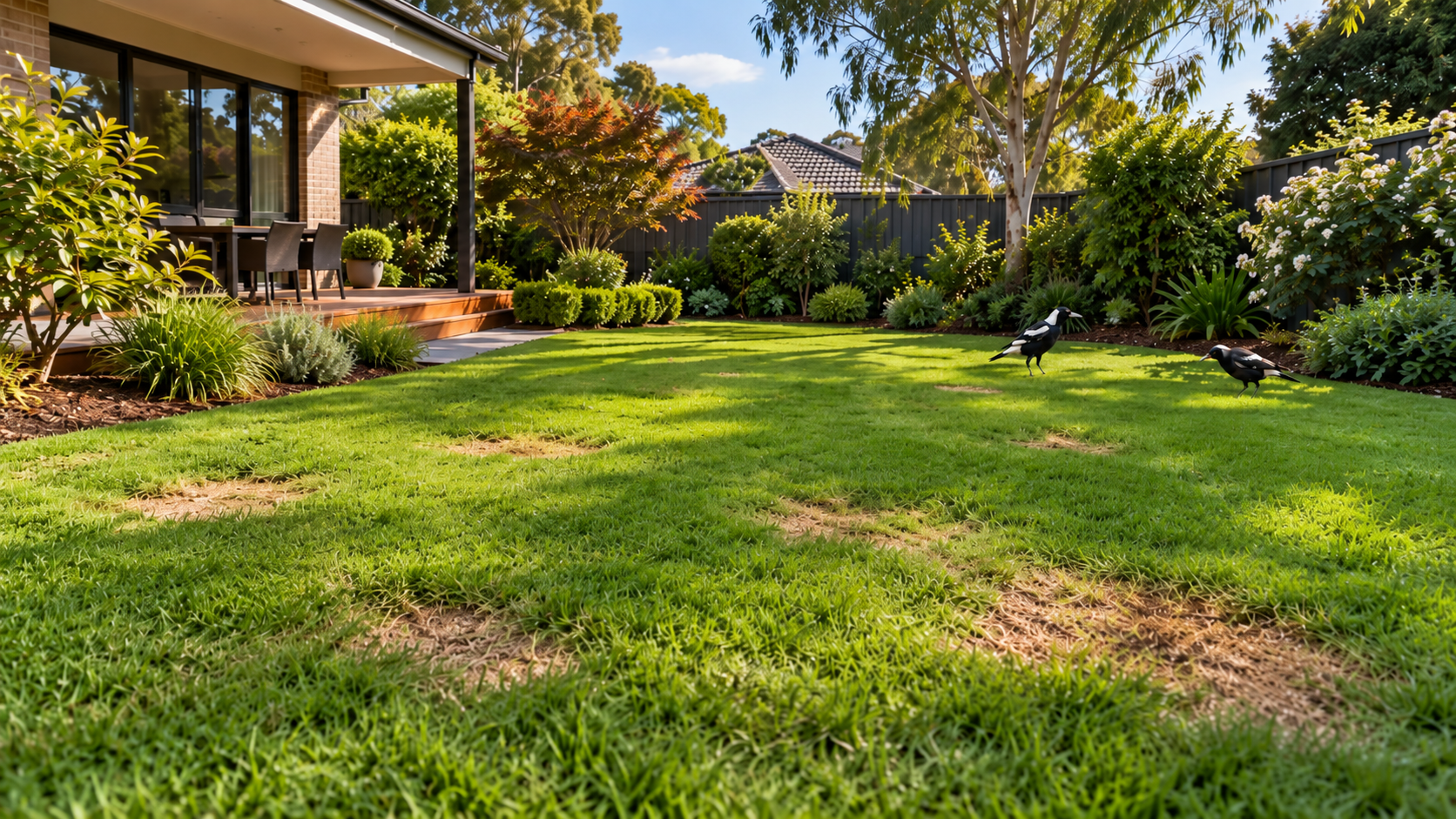
Magpies and other birds suddenly spending a lot of time pecking through one section of lawn can indicate plenty of insect activity underneath.
It is a useful clue, not a diagnosis. Birds eat many different insects, so always check beneath the turf before treating.
Absolutely.
Before blaming lawn grubs, consider:
If a patch is brown but the roots remain healthy and firmly attached, look beyond curl grubs.
There is no single Victorian “grub season” because different lawn pests have different life cycles. However, warmer conditions from spring through autumn are an important monitoring period for many common lawn pests.
Late spring and summer are particularly worth watching for beetle larvae and sudden turf damage. African black beetle larval damage, for example, is commonly monitored from late spring into summer.
Armyworm timing can vary. Common armyworm activity can increase during spring and early summer, while Agriculture Victoria advises that fall armyworm activity is more likely during Victoria's warmer summer and autumn months.
Other Victorian cockchafers can be active through autumn and winter, particularly following rain. This is why diagnosing the insect you actually have is much more useful than treating the lawn simply because the calendar says it is “grub season”.
As Melbourne temperatures begin to rise in spring, start paying closer attention to unexplained thinning, increased insect activity and new brown patches.
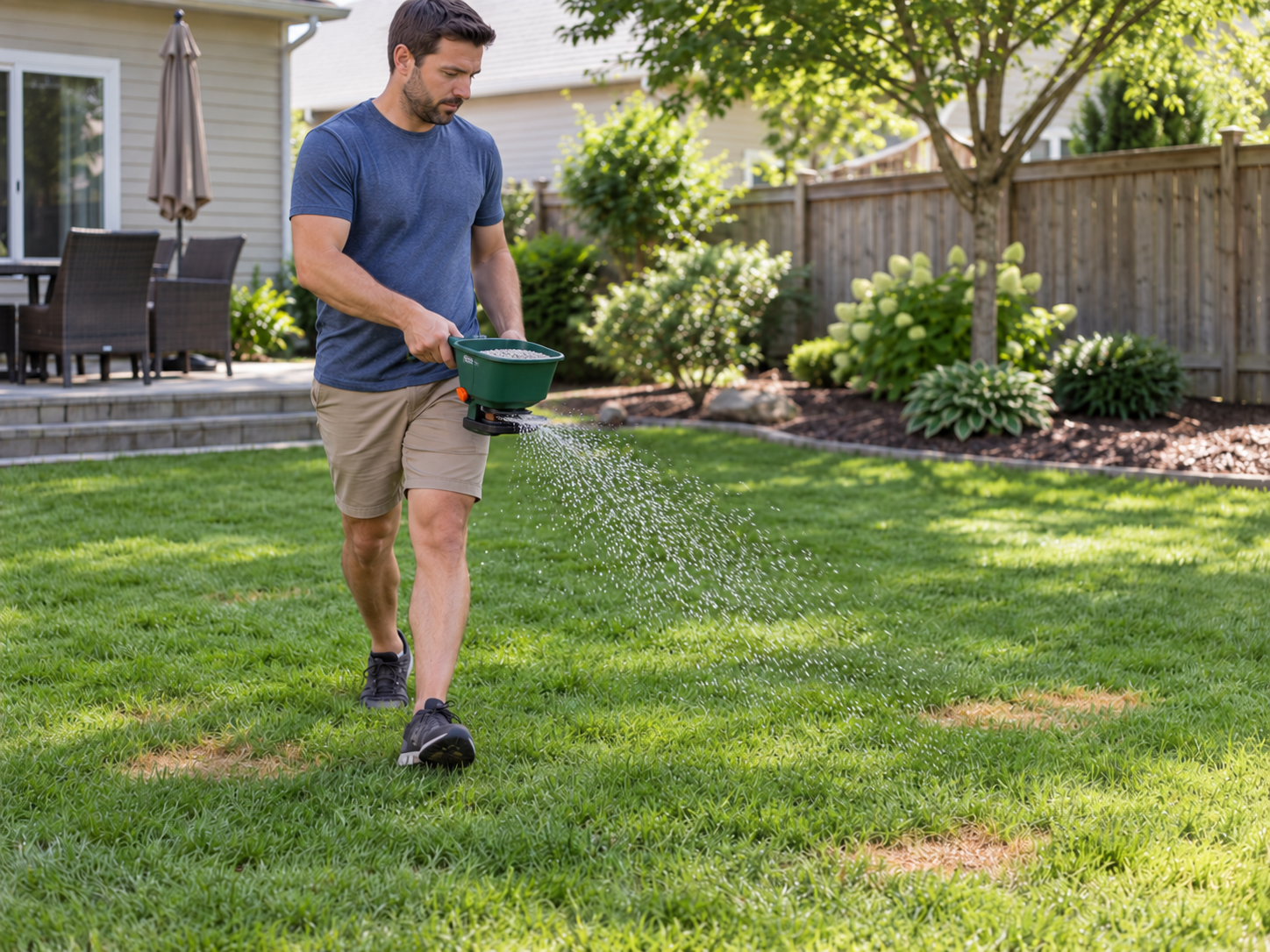
The best lawn grub treatment depends on the pest you have identified. Treat the insect, not simply the brown patch.
For a significant infestation, choose an APVMA-registered lawn insecticide that specifically lists the pest and turf use on its label.
This is where homeowners commonly get caught out. Some treatments need to reach insects feeding around the root zone, while others target caterpillars feeding on foliage or close to the surface. Application timing, watering and repeat treatments can therefore differ.
Always follow the product label rather than assuming every lawn insecticide should be applied in the same way.
Act early where possible. Young larvae are generally easier to manage than mature populations, and early treatment also gives your lawn a much better chance of recovering before large areas are lost.
If you prefer a lower-chemical approach and the infestation is still manageable, there are several options.
For small areas, lifting the turf and physically removing visible curl grubs can reduce numbers.
Beneficial nematodes are another biological option available in Australia for certain soil-dwelling beetle larvae. These microscopic organisms are watered into the soil, where suitable species can target insect larvae. They require the right soil moisture and temperature conditions, so follow the supplier's application instructions carefully.
Encouraging a healthy garden ecosystem can also help. Birds and several naturally occurring predators feed on beetle larvae, although birds searching for a heavy infestation can sometimes cause their own temporary lawn damage.
Natural controls are most useful when you have correctly identified the pest and caught the problem early. If turf is disappearing rapidly, do not continue with an ineffective treatment while the infestation spreads.
Once the pest is under control, give the lawn a chance to recover before deciding it needs replacing.
Start by lightly raking away loose, dead material so sunlight, water and air can reach surviving grass. Then support new growth with appropriate watering and nutrition.
How quickly your lawn repairs itself will depend partly on the grass variety and the time of year.
Kikuyu is an aggressive spreading grass and can repair damaged sections quickly during warm growing conditions. Buffalo also spreads through runners and can fill moderate areas of damage when actively growing.
Couch can recover strongly too, although its growth will slow as Melbourne temperatures fall.
Tall fescue behaves differently because it does not spread across large bare areas as aggressively as warm-season running grasses. Where individual plants have been killed, larger bare sections may need patching, reseeding or replacement turf.
If the root system has been badly destroyed across a large area, continually trying to revive isolated pieces of turf may cost more time and effort than replacing the damaged section.
You cannot guarantee that lawn grubs will never arrive, but a healthy lawn and regular monitoring can greatly reduce the damage they cause.
The most useful habits are simple:
Most importantly, do not treat every brown patch as lawn grub damage. Accurate identification is one of the simplest ways to avoid wasting money and applying unnecessary products.
If your lawn has suddenly developed spreading brown patches, the turf is lifting away from the soil, birds are actively searching the area and you can find C-shaped larvae around damaged roots, there is a good chance root-feeding grubs are involved.
If the roots remain intact but grass blades are being rapidly chewed and caterpillars appear during a soapy-water test, you may instead have an armyworm or similar caterpillar pest.
Either way, checking first gives you a much better chance of choosing the right treatment and getting your lawn growing strongly again.
And if the damage has gone too far, replacing badly affected sections with fresh turf can often be the quickest route back to a healthy lawn. HG Turf Group can help you choose a turf variety suited to your property, growing conditions and Melbourne's climate.