
Victoria’s climate keeps lawn owners on their toes. One week you’re dodging frost, the next you’re sweating through a heatwave. Buffalo grass handles our conditions better than most, but it still needs the right job done at the right time. That’s where a clear, seasonal plan makes all the difference.
This Buffalo lawn care calendar is designed as a bookmarkable cheat sheet for Victorian homeowners. Scroll it on your phone, check the season, and you’ll know exactly what to do, what to avoid, and why it matters. It’s based on real, everyday Buffalo turf care in Melbourne and surrounds, not generic advice lifted from interstate guides
Goal: Wake the lawn up and repair winter damage
Quick answer: Spring is when Buffalo comes back to life. Mow gently, aerate if compacted, and feed to encourage lateral growth.
Mowing: The first cut matters
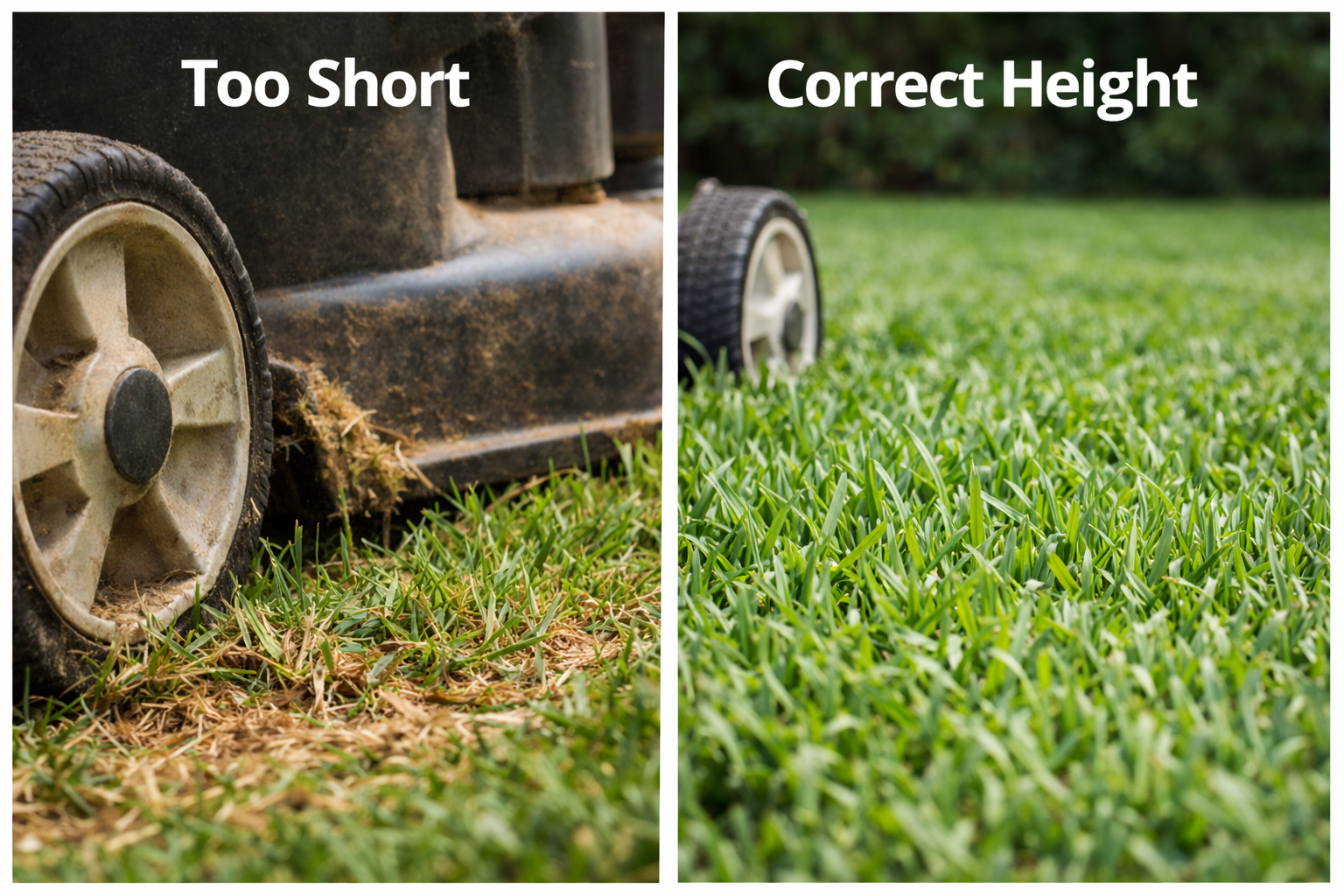
Buffalo must not be scalped in spring. Unlike couch or kikuyu, it grows via runners and hates aggressive low cuts.
What to do
This protects the crown of the plant and prevents shock after winter.
Renovation: Fix compaction, not with aggression
Buffalo prefers gentle aeration, not scarifying.
Best options
Avoid dethatching machines. Buffalo doesn’t respond well to aggressive removal of runners and stolons.
Nutrition: Feeding for spread, not surge
Use a slow-release, Buffalo-safe fertiliser in spring. This promotes steady growth and helps the lawn thicken naturally.
✔️ Look for fertilisers labelled safe for Buffalo
❌ Avoid high-nitrogen liquid feeds early on
Weed control: Read labels carefully
Buffalo is sensitive to many common bindii and broadleaf sprays.
Goal: Heat survival and moisture retention
Quick answer: Raise the mower, water deeply, and protect the roots from heat stress.
Mowing: The Heat Rule
In extreme heat, longer grass equals cooler soil.
Ideal height in 35°C+ conditions
This shades the soil, reduces evaporation, and protects surface roots.
Watering: Less often, but deeper
Buffalo is drought-tolerant once established, but Victorian heatwaves are a different beast.
Best practice
How Buffalo tells you it’s thirsty
These are early warnings. Don’t wait for browning.
Troubleshooting: Heat stress vs pests
Heat stress:
Pests (like lawn grubs):
If turf lifts, check beneath before assuming heat damage.
Goal: Build the winter shield
Quick answer: Autumn is about strengthening roots and preventing winter weed takeover.
Fertilising: The final feed
Apply a low-nitrogen fertiliser with potassium in early–mid autumn.
Why potassium?
Avoid high nitrogen after late April. It pushes soft growth that struggles in cold.
Weed prevention: Stop them before they start
Autumn is prime time for pre-emergent weed control.
Repair window: Don’t miss it
In Victoria, Buffalo growth slows sharply by late April.
✔️ Repair bare patches by early–mid April
❌ After that, recovery is slow and unreliable
Goal: Patience and appearance
Quick answer: Do very little. Buffalo slows down but usually keeps some colour in Melbourne.
What to expect visually
This is normal. Don’t chase colour with fertiliser.
Mowing and maintenance
Traffic and frost sensitivity
Buffalo is moderately sensitive to frost and heavy traffic in winter.
Best winter advice
Honestly? Leave it alone.
Winter damage is usually caused by well-meaning over-care.
1. Using the wrong weed killers
Many herbicides containing dicamba or similar actives can permanently damage or kill Buffalo.
Rule: If it doesn’t say Buffalo-safe, don’t use it.
2. Scalping or scarifying
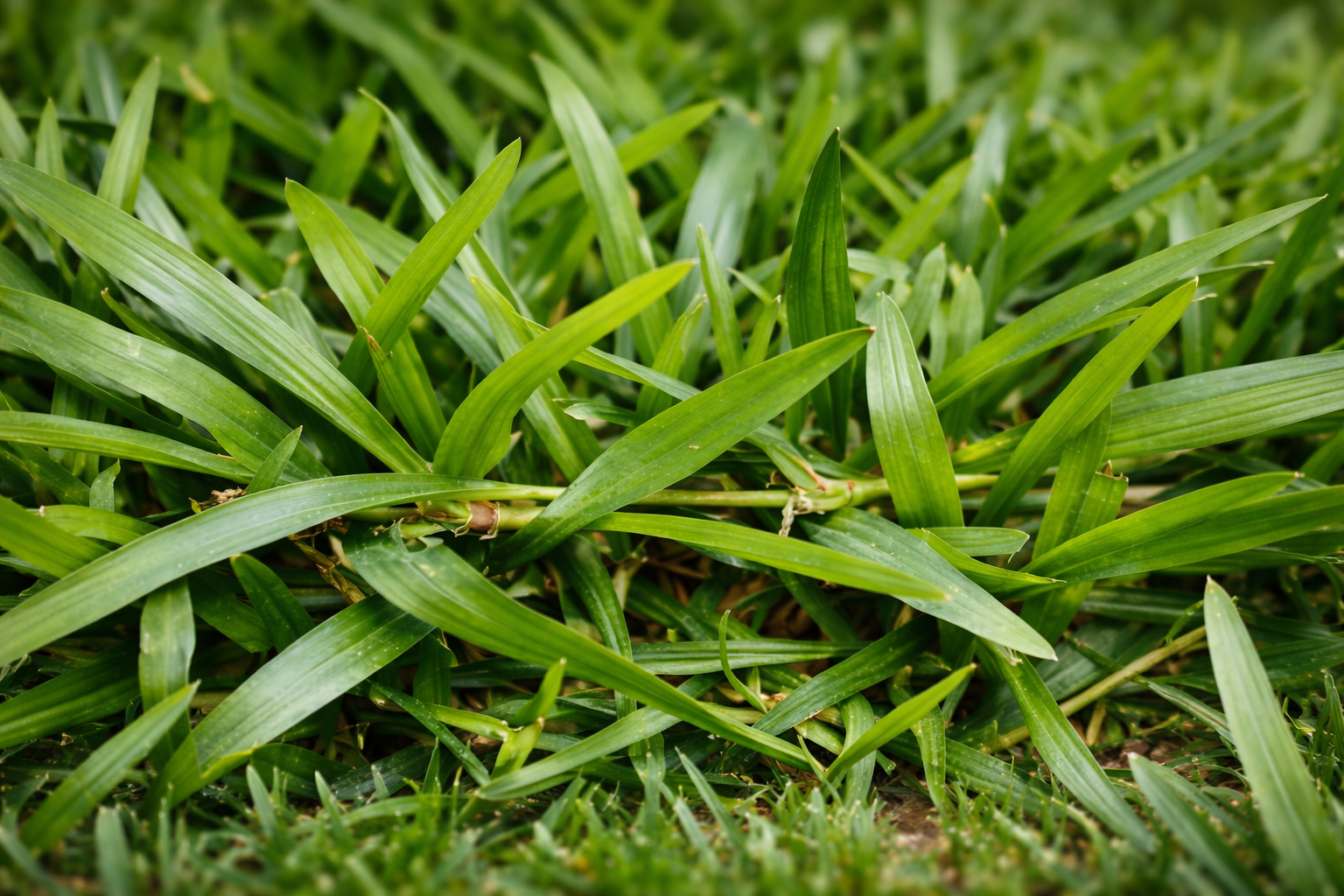
Aggressive renovation removes runners and exposes the crown. Buffalo doesn’t bounce back like couch.
3. Overwatering in cool weather
Constant moisture in autumn and winter encourages fungal disease and weak roots.
Water only when the lawn actually needs it.
Buffalo grass is forgiving, resilient, and perfect for Melbourne conditions when you work with its growth cycle. Most lawn problems don’t come from neglect. They come from doing the wrong job at the wrong time.
Use this Buffalo lawn care calendar as your seasonal guide:
Follow that rhythm, and your Buffalo lawn will reward you year after year with dense coverage, fewer weeds, and far less stress. 🌱

.webp)
.webp)