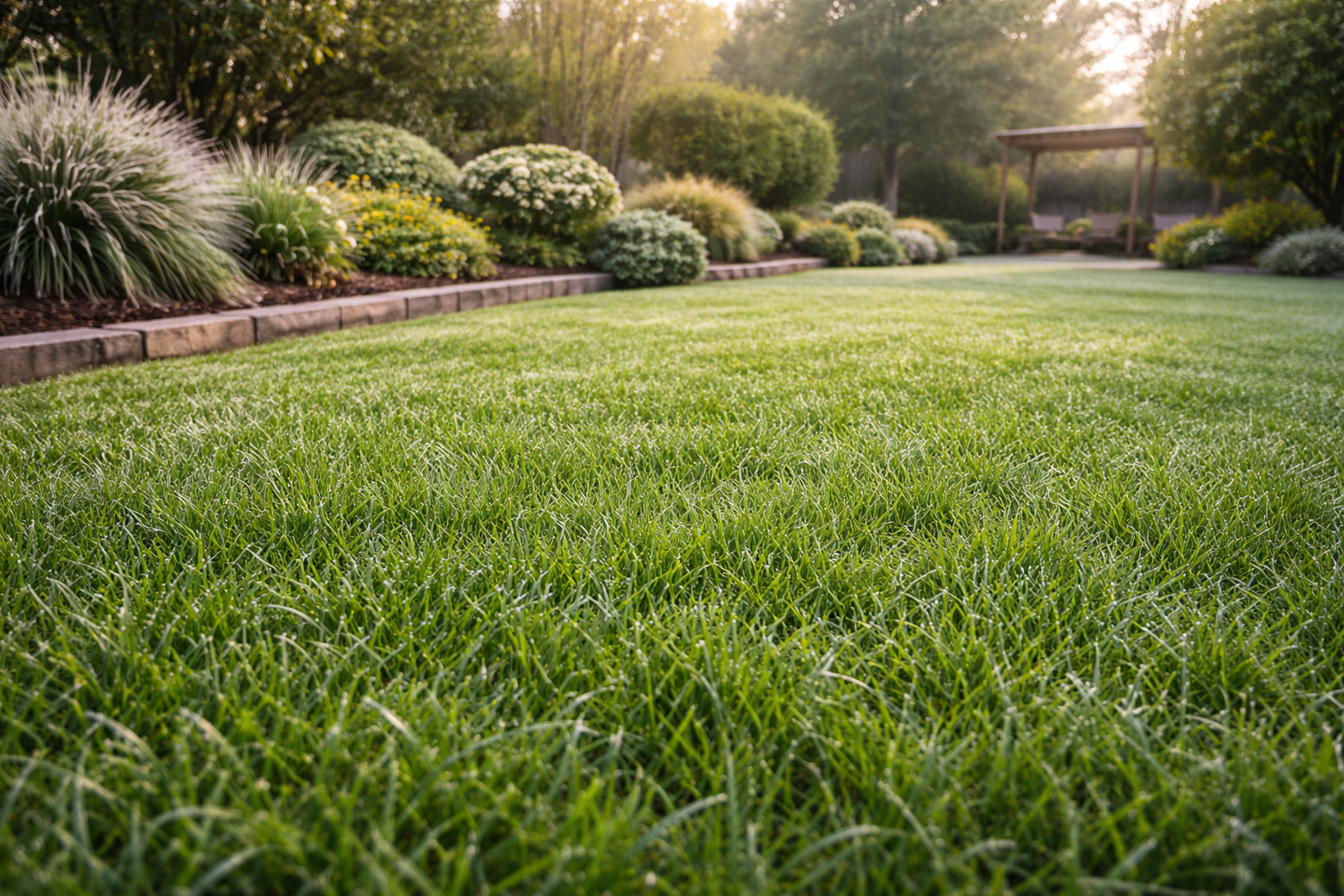
Tall Fescue is very different from Buffalo, Kikuyu, or Couch. It doesn’t spread by runners, it doesn’t love extreme heat, and it doesn’t forgive bad timing. But when it’s managed properly, Tall Fescue delivers a lush, deep-green lawn that looks incredible through Melbourne’s cooler months.
If you’ve ever wondered “Should I fertilise now?”, “Why is my lawn struggling in summer?”, or “Is it too late to overseed?”, this guide gives you direct answers first, followed by practical, real-world advice based on how Tall Fescue actually behaves in Melbourne.
Goal: Encourage healthy growth without triggering disease.
Quick answer: Spring is about steady growth, not pushing Tall Fescue too hard.
Mowing: Gentle and consistent
Tall Fescue grows upright in clumps and must not be cut too short.
Best spring height
Mow regularly, removing small amounts at a time. Scalping exposes the crown and invites stress and disease.
Renovation: Light touch only
Unlike warm-season grasses, Tall Fescue does not spread laterally. Spring is not ideal for major repairs.
✔️ Light aeration if soil is compacted
❌ Aggressive dethatching or heavy overseeding
Save major renovation work for autumn when soil temperatures suit seed germination.
Nutrition: Feed carefully
Apply a balanced fertiliser in early spring.
Why balanced?
Avoid heavy nitrogen applications. Tall Fescue pushed too hard in spring struggles later.
Disease awareness
Spring warmth plus moisture can trigger fungal issues like brown patch.
Goal: Survival and stress reduction
Quick answer: Tall Fescue survives summer through shade, height, and water — not toughness.
Mowing: Height is protection
In summer, mowing height is critical.
Ideal summer height
Longer leaf blades shade the soil and protect shallow roots from heat stress.
Watering: Non-negotiable
Tall Fescue has higher water needs than warm-season grasses.
Watering strategy
Visual signs of stress
Tall Fescue tells you quickly when it’s struggling:
These are early warnings. Once browning occurs, recovery is slower.
Traffic management
Tall Fescue does not handle heavy summer traffic well.
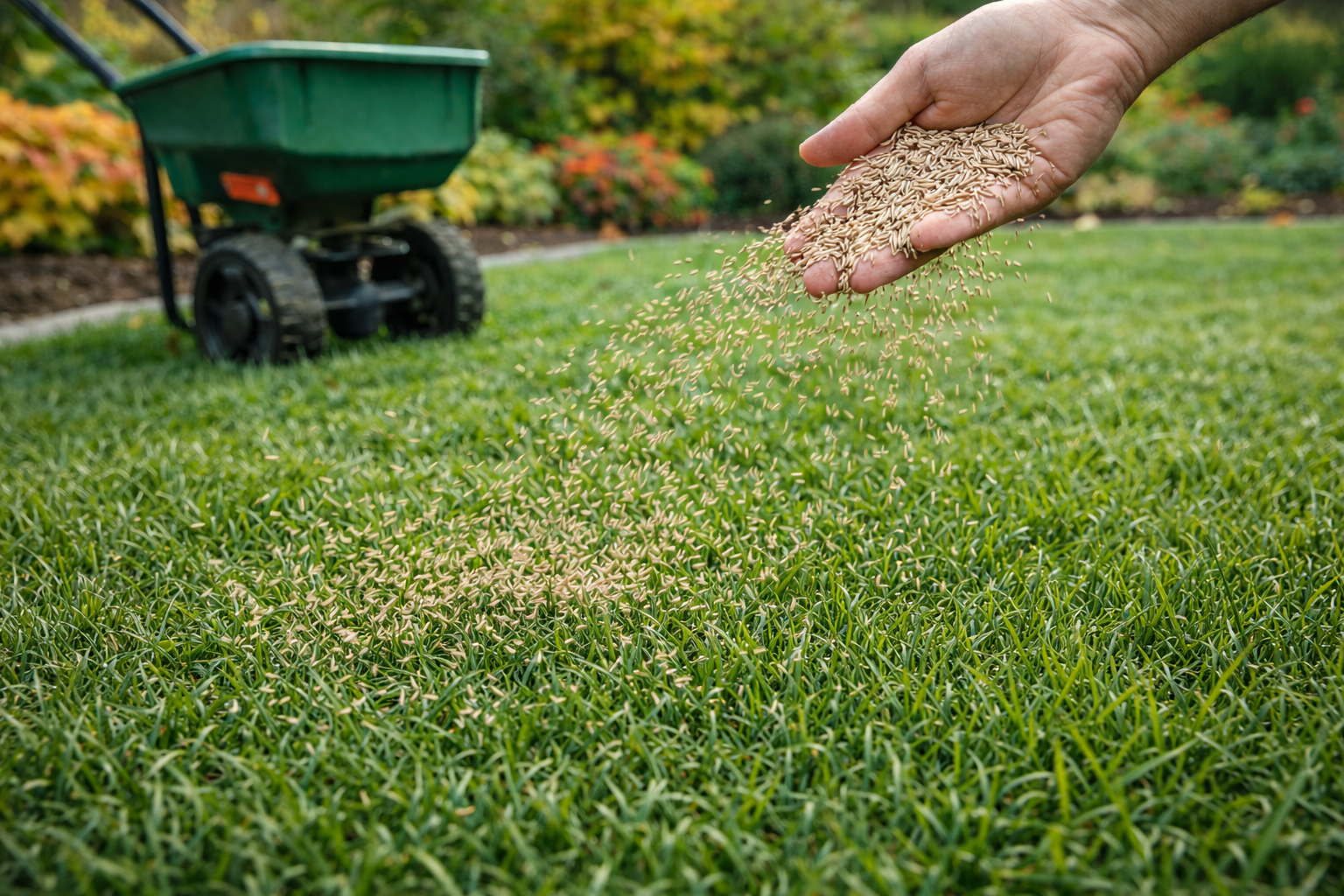
Goal: Repair, thicken, and reset the lawn
Quick answer: Autumn is Tall Fescue’s most important season.
Renovation: The golden window
In Victoria, late March through April is prime time.
Autumn renovation may include
Warm soil and cool air create perfect growing conditions.
Seeding success tips
Fertilising: Build strength
Apply a fertiliser with:
This supports root development heading into winter.
Weed control
Dense autumn growth is your best weed defence.
Goal: Maintain colour and protect structure
Quick answer: Tall Fescue stays green in Melbourne winters but grows slowly.
What to expect
This is one of Tall Fescue’s biggest advantages over warm-season grasses.

Mowing and care
Traffic sensitivity
Tall Fescue bruises easily in winter.
Damage done in winter often shows up in spring.
1. Treating it like Couch or Kikuyu
Tall Fescue does not spread. Scalping or hoping it “fills in” leads to bare patches.
2. Skipping autumn renovation
If you miss autumn, you’ve missed your chance for real improvement that year.
3. Letting it dry out in summer
Tall Fescue has poor drought tolerance. Once roots are damaged, recovery is slow and patchy.
Tall Fescue rewards precision, not aggression. When you respect its cool-season nature and plan around Melbourne’s climate, it delivers a thick, luxurious lawn that looks its best when others fade.
Remember:
Follow this Tall Fescue lawn care calendar and you’ll enjoy a lawn that looks intentional, healthy, and beautifully consistent year-round 🍃

.webp)

.webp)