
Kikuyu is one of the toughest lawn grasses you can grow in Victoria — but it’s also one of the easiest to get wrong. Its rapid growth, aggressive runners, and seasonal mood swings mean timing is everything. Do the right job at the wrong time, and you’ll either weaken the lawn or watch it take over garden beds and paths.
This Kikuyu lawn care calendar is designed for Victorian homeowners standing in their backyard, wondering things like “Should I mow this low?” or “Is it too late to fertilise?”. It’s a scrollable, bookmarkable cheat sheet built around Melbourne’s frosts, heatwaves, and unpredictable shoulder seasons.
Goal: Harness growth without losing control
Quick answer: Spring is when Kikuyu wakes up fast. Mow early, feed lightly, and keep it contained.
Mowing: Start early, mow often
Kikuyu explodes out of winter dormancy once soil temperatures rise.
Best practice
Letting Kikuyu get too long early in spring encourages thick thatch and weak, spongy growth later.
Renovation: Light work only
Kikuyu responds well to light dethatching, but timing is critical.
✔️ Light scarifying or raking in mid–spring
✔️ Core aeration if soil is compacted
❌ Heavy dethatching too early (cold soil slows recovery)
Nutrition: Feed, but don’t overdo it
Kikuyu loves nitrogen — sometimes too much.
Use a controlled, slow-release fertiliser in mid–late spring to avoid excessive leaf growth and mowing overload.
Goal: Keep up with growth and prevent stress
Quick answer: Summer Kikuyu grows fast. Mow regularly, water deeply, and avoid scalping.
Mowing: Frequency over aggression
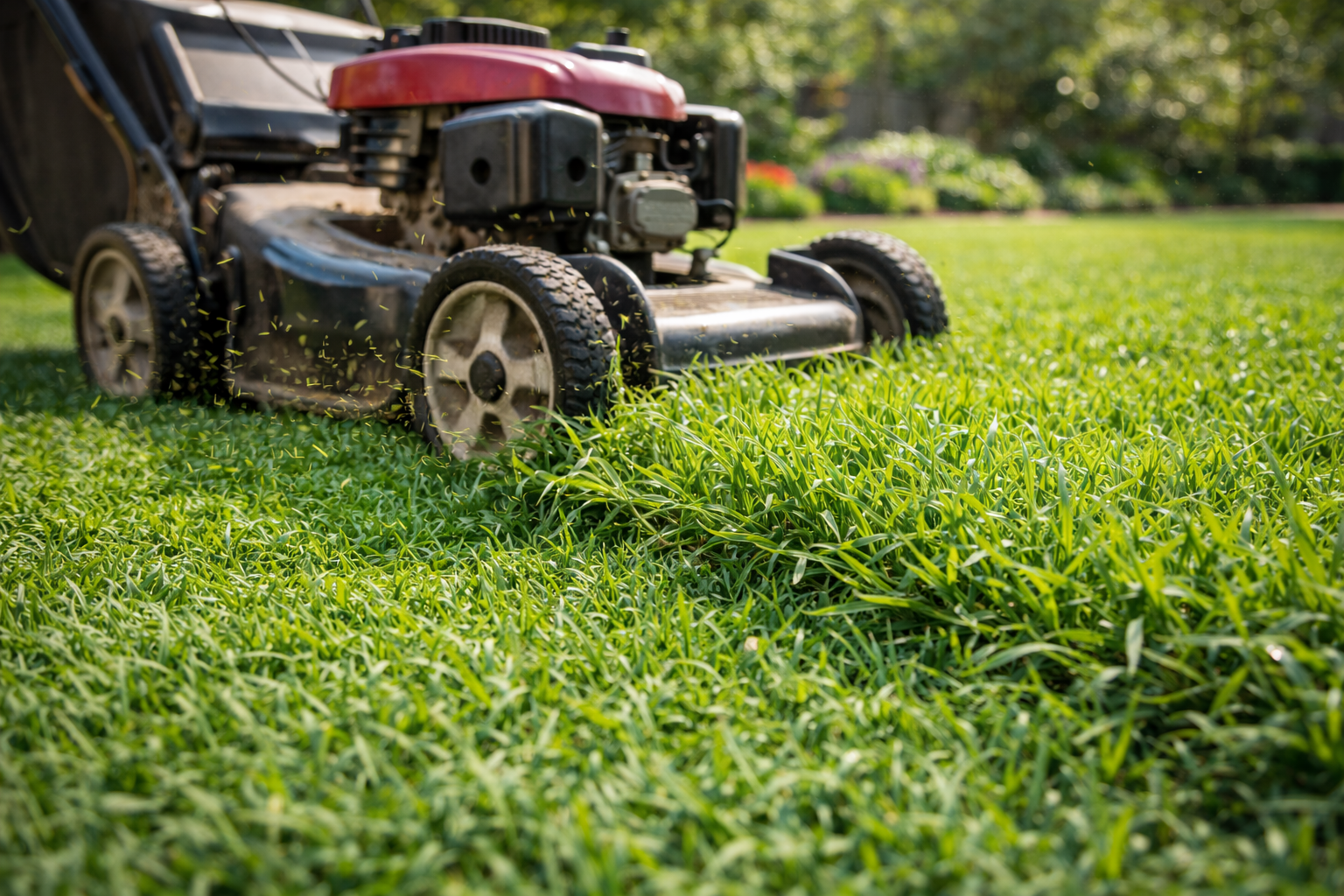
In summer, Kikuyu should be mown every 7–10 days in peak growth.
Ideal height in hot weather
Cutting too low in summer exposes runners and increases moisture loss.
Watering: Deep roots, better lawn
Kikuyu is drought-tolerant once established, but sustained Victorian heat still demands water.
Watering tips
Signs Kikuyu needs water
These are early stress signs — water before browning appears.
Pests: What to watch for
Kikuyu is moderately susceptible to:
Patchy yellowing combined with turf lifting is your clue to check beneath the surface.
Goal: Slow growth and build resilience
Quick answer: Autumn is about calming Kikuyu down and strengthening roots before winter.
Fertilising: Change the formula
Apply a low-nitrogen fertiliser with potassium in early autumn.
Why?
Avoid nitrogen-heavy products after late April.
Weed prevention
Autumn is the best time to stop winter weeds before they germinate.
Repair cutoff
In Victoria, Kikuyu growth slows sharply by late April.
✔️ Repair bare patches before ANZAC Day
❌ Repairs after this often fail due to cold soil
Goal: Containment and patience
Quick answer: Kikuyu goes mostly dormant. Do very little and focus on keeping edges tidy.
What to expect
This is normal dormancy, not lawn death.
Mowing and care
Traffic and frost
Kikuyu handles foot traffic better than most grasses, but frost damage can occur.
Avoid walking on frosty turf where possible.
1. Over-fertilising
Too much nitrogen creates uncontrollable growth, thatch, and constant mowing.
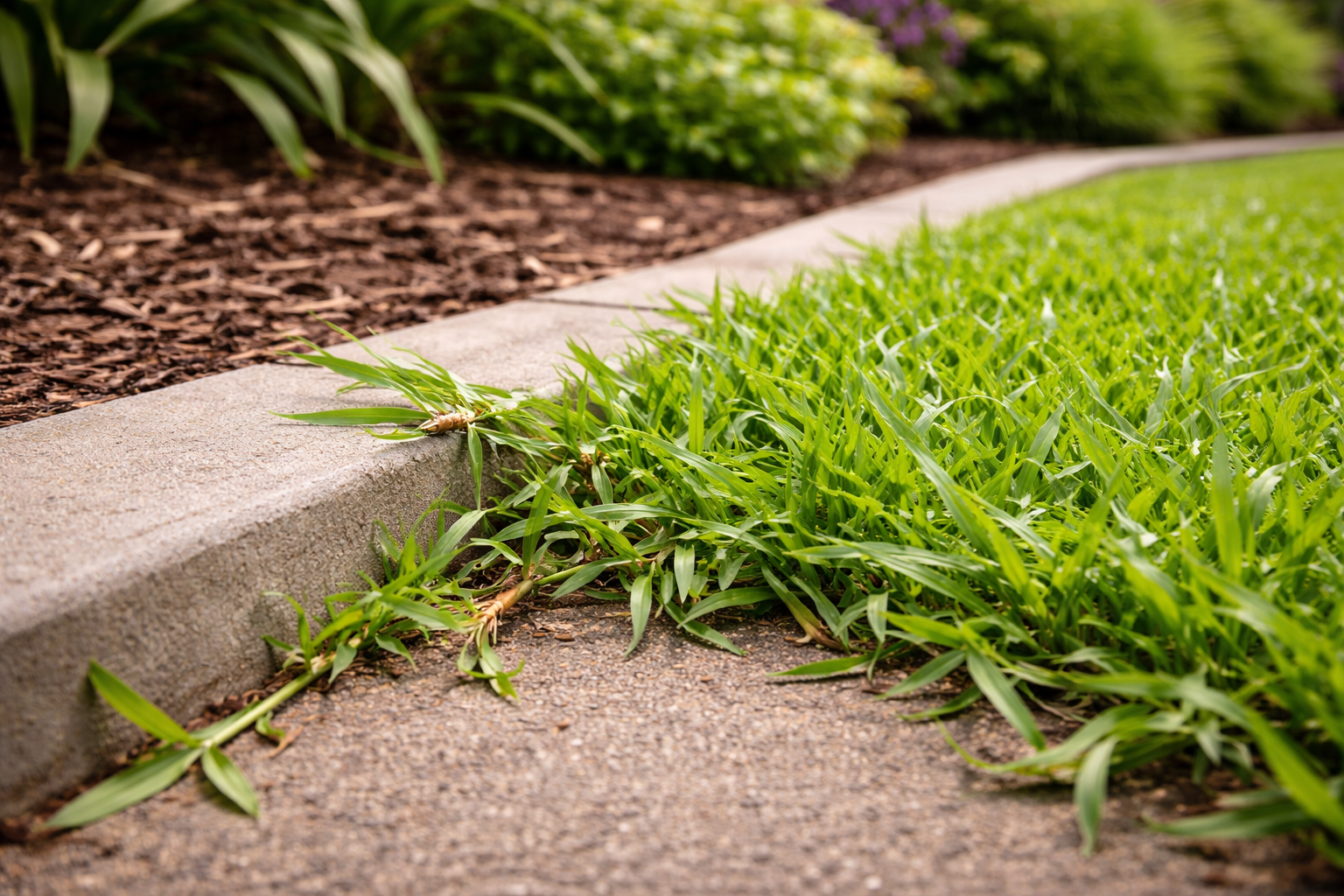
2. Letting it creep
Unchecked runners will invade garden beds, paths, and neighbouring lawns.
Edge regularly. Kikuyu never stops testing boundaries.
3. Winter feeding
Fertilising in winter wastes product and weakens the lawn.
Kikuyu isn’t difficult — it’s enthusiastic. When you work with its growth cycle instead of fighting it, it rewards you with a dense, resilient, hard-wearing lawn that thrives in Melbourne’s climate.
Remember:
Follow this calendar and Kikuyu becomes a strength, not a problem 🌱

.webp)
.webp)