A tired, yellow lawn in Melbourne usually isn't starving. It's been fed at the wrong time.
Between cold snaps that linger into spring and sudden summer heatwaves, fertilising by the calendar alone can do more harm than good. The key is understanding when your lawn is ready to use nutrients, not just when the season says it should be.
Here's the simple truth: timing is driven by soil temperature, not dates. For most warm-season grasses, that magic number is 16°C soil temperature. Below that, fertiliser sits idle. Above it, your lawn wakes up and starts feeding.
And if you've got Tall Fescue? That plays by a different rulebook entirely.
Before diving into timing, let's decode the numbers on the bag.
You'll often see something like 23-4-11. That's your N-P-K ratio:
Quick takeaway:
You don't need to memorise chemistry. Just match the fertiliser to the season's goal.
These are non-negotiable. Ignore them, and even the best fertiliser won't save you.
Hot conditions can burn the leaf and roots, especially on stressed turf.
Fertiliser left sitting on the leaf can scorch it. Watering helps move nutrients into the soil where they belong.
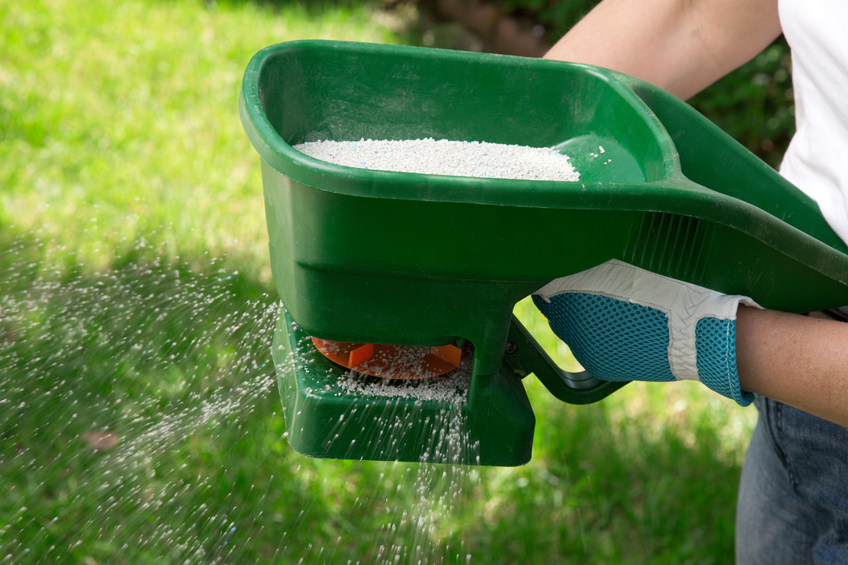
Hand spreading leads to uneven coverage. That's how you end up with stripy lawns, with dark green patches next to yellow ones. Think of fertilising like seasoning food. Even coverage matters.
Fertilise when soil temperatures consistently hit 16°C, not just when spring starts.
In Melbourne, that can vary:
Feed too early and the lawn can't use it. Feed at the right time and you'll see a response within weeks.
Prestige® Buffalo
Rate: ~20-25g per m². Noticeable greening within 10-14 days. Reliable and forgiving, a great all-rounder for Melbourne conditions.
Santa Ana Sports Couch
Rate: ~15-20g per m². Watch out: overfeeding can cause fast, weak growth that struggles without extra mowing and water.
Kikuyu
Rate: ~15-20g per m². Extremely vigorous. In smaller yards, go lighter unless you enjoy mowing twice a week.
Tall Fescue
Spring is a secondary feeding window. Apply lightly (~10-15g per m²) to avoid pushing unnecessary growth.
Pro Tip 🌱Apply a liquid iron treatment about two weeks before your main fertiliser. You'll boost colour without forcing growth, like giving your lawn a subtle green glow-up before the main event.
Summer feeding is a maintenance top-up, not a growth phase.
Best timing:
Buffalo and Couch
Apply a light rate (~10-15g per m²). A second application may be helpful in mid-summer if the lawn is actively growing.
Kikuyu
Go easy. Overfeeding in humid conditions (especially February) can lead to thatch build-up and increased fungal risk.
Tall Fescue
Do not fertilise in summer. Focus on deep, infrequent watering instead.
This is the most important fertilising window of the year for warm-season grasses. If you only fertilise once, do it in autumn.
You're preparing your lawn for winter. A strong autumn feed helps:
Timing: main application in April, with a second application no later than mid-May.
Prestige® Buffalo
Rate: ~20-25g per m². Helps maintain colour well into winter.
Santa Ana Couch
Rate: ~15-20g per m². Leads to quicker green-up in spring.
Kikuyu
Rate: ~15-20g per m². Improves frost resistance, especially important in areas like Lilydale, Belgrave, and Healesville.
Tall Fescue
This is its primary feeding season. Apply now and again in late May for best results.
Do not apply granular fertiliser to warm-season grasses in winter. Your lawn is dormant. Fertiliser won't feed the grass, it feeds weeds instead.
What you can do:
Tall Fescue stays active in cooler weather. Apply a light balanced fertiliser in late June or early July.
.png)
This is where most people guess, and where lawns suffer. Here's a simple method that works every time.
Use a tape measure. Example: Length 10m, Width 5m = Area 50m².
If your fertiliser recommends 20g per m²: 50m² × 20g = 1,000g (1kg).
Add 5-10% extra for overlap and spreader inefficiency. Final amount: 1.05-1.1kg.
Don't skip this. A poorly calibrated spreader can undo all your effort.
Fertilising your lawn in Melbourne isn't about doing more. It's about doing it at the right time.
Get this rhythm right, and your lawn becomes easier to manage, more resilient, and far better looking year-round. Understanding your turf variety and local conditions removes the guesswork entirely, and that's where real lawn confidence begins.
A well-fed lawn starts with the right foundation. Explore premium Melbourne-grown turf varieties or get a fast online quote tailored to your property today. Because when your lawn is fed properly, it doesn't just survive. It thrives. 🌿