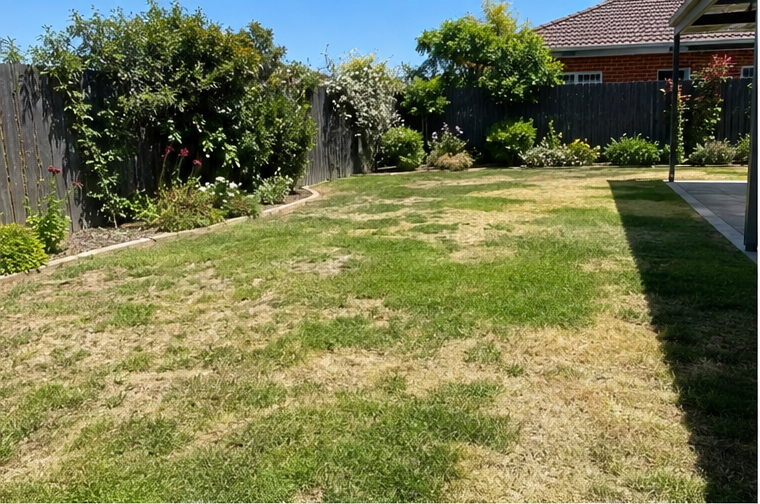
A Buffalo lawn looking yellow, patchy or thin can be frustrating, especially when you've already tried watering or fertilising without seeing much improvement. The good news is that Buffalo is an incredibly resilient grass. In many cases, a lawn that looks beyond saving is simply stressed, dormant or recovering from seasonal conditions rather than completely dead.
Buffalo grass behaves differently from other turf varieties, particularly in Melbourne's unpredictable climate. It grows more slowly through winter, prefers a little shade compared to Kikuyu, and responds best to a steady, measured recovery rather than quick fixes.
This guide explains how to diagnose Buffalo lawn problems, revive dead patches, and know when it's time to repair or replace sections of your lawn.
Most Buffalo lawns that appear dead are actually dormant or severely stressed. Check before you take action.
Before applying fertiliser or reaching for new turf, spend a few minutes inspecting the lawn.
Buffalo spreads via thick surface runners. Gently pull back the grass and inspect these runners.
Grab a small handful of grass.
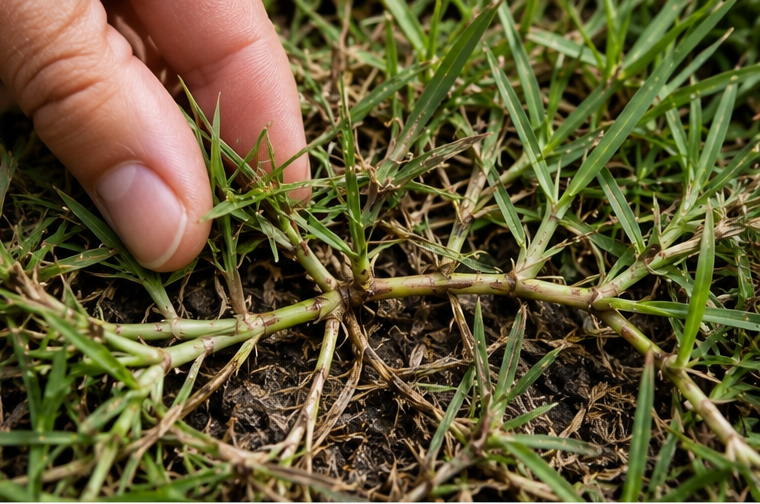
Even badly stressed Buffalo usually produces small green shoots once temperatures begin warming in spring.
If you still have healthy runners, recovery is very achievable.
Understanding why your lawn declined is the first step towards fixing it properly.
The most common Buffalo grass problems we see across Melbourne include:
Buffalo is drought tolerant once established, but prolonged dry weather can cause:
Heavy clay soils are common throughout Melbourne. Poor drainage often leads to:
Although Buffalo tolerates shade better than Kikuyu, it still needs several hours of sunlight each day. Areas beneath large trees often become sparse over time.
Children, pets and regular foot traffic compress the soil, making it difficult for air, water and nutrients to reach the roots.
Many homeowners only fertilise once or twice a year. Without adequate nutrients, Buffalo gradually loses colour and density.
One of the biggest misconceptions is that Buffalo has died during winter. Across Victoria, Buffalo naturally slows dramatically as soil temperatures fall. This is perfectly normal.
Before changing your watering or feeding routine, prepare the lawn properly. Recovery always starts with improving the growing conditions.
Rake away loose brown leaves and accumulated debris. This allows sunlight and airflow to reach the living grass beneath.
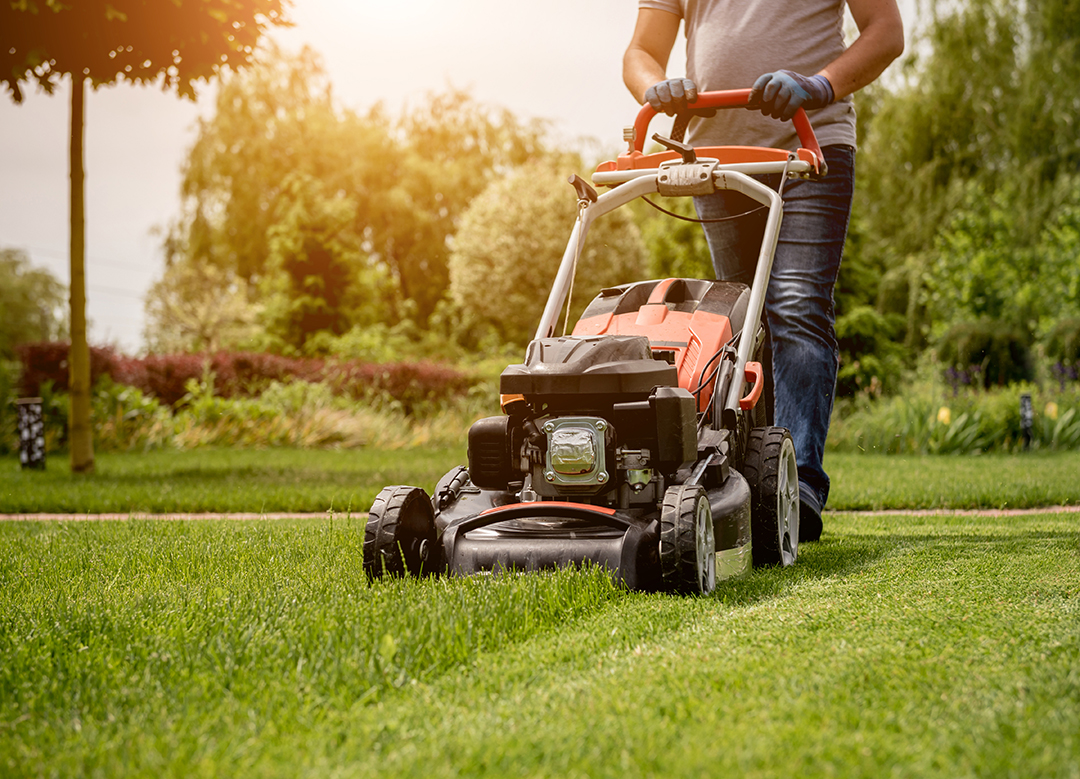
Avoid cutting Buffalo too short. Maintain a mowing height around 40 to 60 mm, depending on the variety. Scalping Buffalo removes valuable leaf area that helps drive recovery.
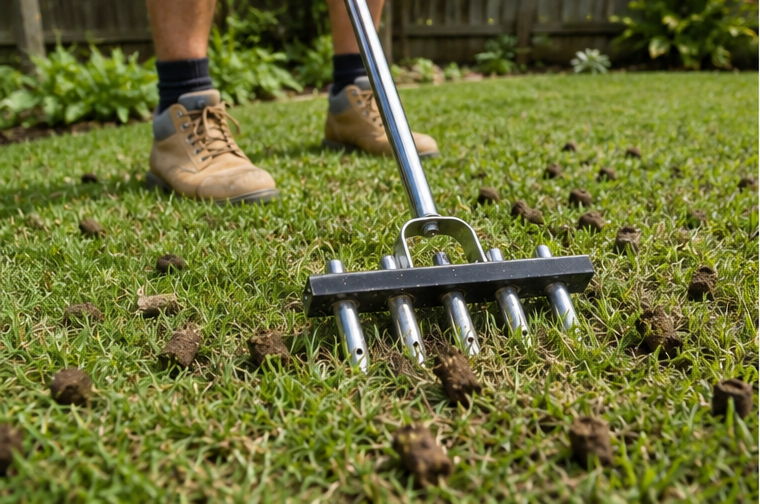
If the surface has become hard or compacted, aerate the lawn using a garden fork or core aerator. This improves oxygen movement and encourages new root growth.
Applying large amounts of fertiliser to a stressed lawn can do more harm than good. Allow the lawn to begin actively growing before introducing a quality slow-release lawn fertiliser.
Recovering lawns need deep, consistent watering rather than daily sprinkling.
One of the biggest mistakes homeowners make is watering every day for a few minutes. Instead:
This encourages deeper root development.
A recovering Buffalo lawn may need:
Most established Buffalo lawns require very little irrigation unless conditions are unusually dry. Overwatering during winter is one of the leading causes of fungal disease.
Always adjust watering according to rainfall rather than following a fixed schedule.
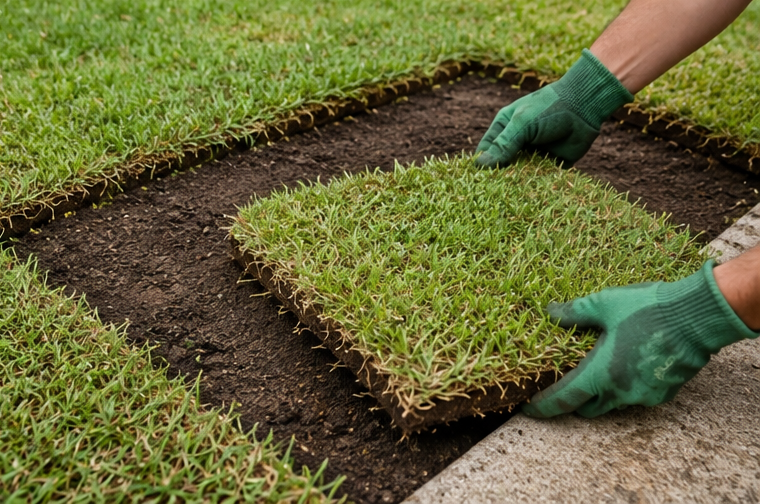
The best repair method depends on the size of the damaged area.
If surrounding runners are healthy, Buffalo can often spread back into small damaged sections naturally. Help it along by:
Patience is often rewarded.
For areas that are too large to fill naturally, transplant healthy Buffalo runners from another part of the lawn. Plant them into prepared soil and keep them consistently moist until established.
Where entire sections have died, replacing the affected area with fresh Buffalo turf is usually the fastest and most reliable solution. Preparing the soil properly before laying new turf gives the best chance of seamless establishment.
Recovery depends on the cause of the damage and the time of year.
Typical Melbourne recovery timelines are:
ConditionExpected recoveryMild drought stress2 to 4 weeksModerate thinning4 to 8 weeksDormant winter lawnGrowth resumes naturally in springLarge repaired patches6 to 10 weeksFull lawn renovationSeveral months
Recovery is always faster when soil temperatures are warm. Trying to force growth during winter usually leads to disappointment.
Not every lawn is worth saving.
After inspecting hundreds of Buffalo lawns, these are usually the signs we look for when recommending replacement.
Replacing a lawn isn't admitting defeat. Sometimes starting fresh provides a healthier, more attractive lawn much sooner than trying to rescue one that's beyond recovery.
A new Buffalo lawn also offers the opportunity to improve soil preparation and drainage, helping prevent the same problems returning.
Yes. If the runners and roots are still alive, Buffalo can recover surprisingly well with correct watering, nutrition and patience.
The most common causes are drought stress, heavy shade, soil compaction, fungal disease, pet damage or poor drainage.
Only once the lawn begins actively growing again. Fertilising severely stressed or dormant grass often provides little benefit.
Absolutely. Buffalo naturally slows during Melbourne's colder months and usually greens up again as temperatures rise in spring.
Most Buffalo lawn problems can be fixed when they're diagnosed early and treated correctly. The key is identifying the cause before reaching for fertiliser or increasing the watering.
With the right preparation, sensible watering and realistic expectations, many struggling Buffalo lawns can return to a healthy, thick green lawn over the following growing season.
If your lawn has reached the point where repair is no longer practical, replacing damaged areas with premium Melbourne-grown Buffalo turf can often deliver a quicker, longer-lasting result.
Browse our premium Melbourne-grown Buffalo turf varieties or request a fast online quote from HG Turf Group today.

.webp)